

Three Big Nights
First, my rostering habit: twelve hours a shift, and I always take three in a row. Night one I push through. Night two my body seems to accept its fate. Night three runs on pure inertia. Colleagues ask what I get out of it, and I say: the long break afterwards, sleeping it all back in one go. It sounds like a bargain. But every year, somewhere in that third night, I feel like a battery running dry — the warning light already red, and still one whole night left to glow. My name is Su Wanqing. I am thirty-four, and this is my ninth year working nights in a Seattle delivery ward.
My family still does not quite understand night-shift tiredness. My mother's classic line is: “But you sleep in the daytime, don't you? What's wrong with coming out at noon for a little shopping?” I explained it to my husband once: you lie down at ten at night, and at two in the morning I wake you to cook, check homework and chase a child around the house — would you enjoy that? He thought about it and said, fair enough. Since then he has at least learned one thing — on the morning I come off a night shift, the sky can fall in, but he lets me sleep first.
The Drive Home I Cannot Remember
Thursday morning, the third night shift ends. The last night of the run is always the hardest. Babies arrived in waves after midnight, and my thermos sat full from one a.m. to seven without my taking a single sip. At handover I stood at the nurses' station, my badge in my hand, and my mind went blank for a few seconds — I could not remember which mother I had just been describing. That kind of tired is not sleepiness. It is being hollowed out and still walking forward on automatic.
What truly frightened me was the drive home, those dozen or so minutes. The car was in the garage, engine off, and I sat in the driver's seat staring — how I had driven that stretch, how many red lights I had stopped at, I had no memory of it at all. It was not the first time: once, in the hospital car park, too heavy-eyed to drive, I tipped the seat back, set a fifteen-minute alarm and slept before leaving, and thought myself clever. Now it is all retrospective fear. At home I took a hot shower, then pulled the blackout curtains — my bedroom is arranged like a cave: curtains, door gap sealed, phone on silent, nothing left out. But that day, exhausted to the limit, my mind would not stop. Every time I closed my eyes, all I could hear was the monitors.

Someone Said to Me: You Can Close Your Eyes
Friday afternoon. I slept a half-dreaming daytime sleep and woke a little after three, my shoulders and waist rusted stiff. I stared at the ceiling and made a decision: this break, no catching up on sleep, no shopping, no answering any “while you're at it” invitations — I would properly book myself one session of care. I even made a fool of myself beforehand: I mixed up the time, arrived an hour early, and waited in the car downstairs, nearly falling asleep again until an alarm woke me. People who care for everyone else spend all their memory on their patients; when it comes to ourselves, this is what we are like. I sat in the car laughing at myself. The therapist who received me, Ajian, only asked what I do and which postures fill my days, nodded, skipped the small talk and said: no need to force yourself to chat today — if you are sleepy, sleep. At that one sentence I nearly fell apart. In my world, everyone is waiting for me to keep my eyes open. Only here did someone say to me: you can close your eyes.
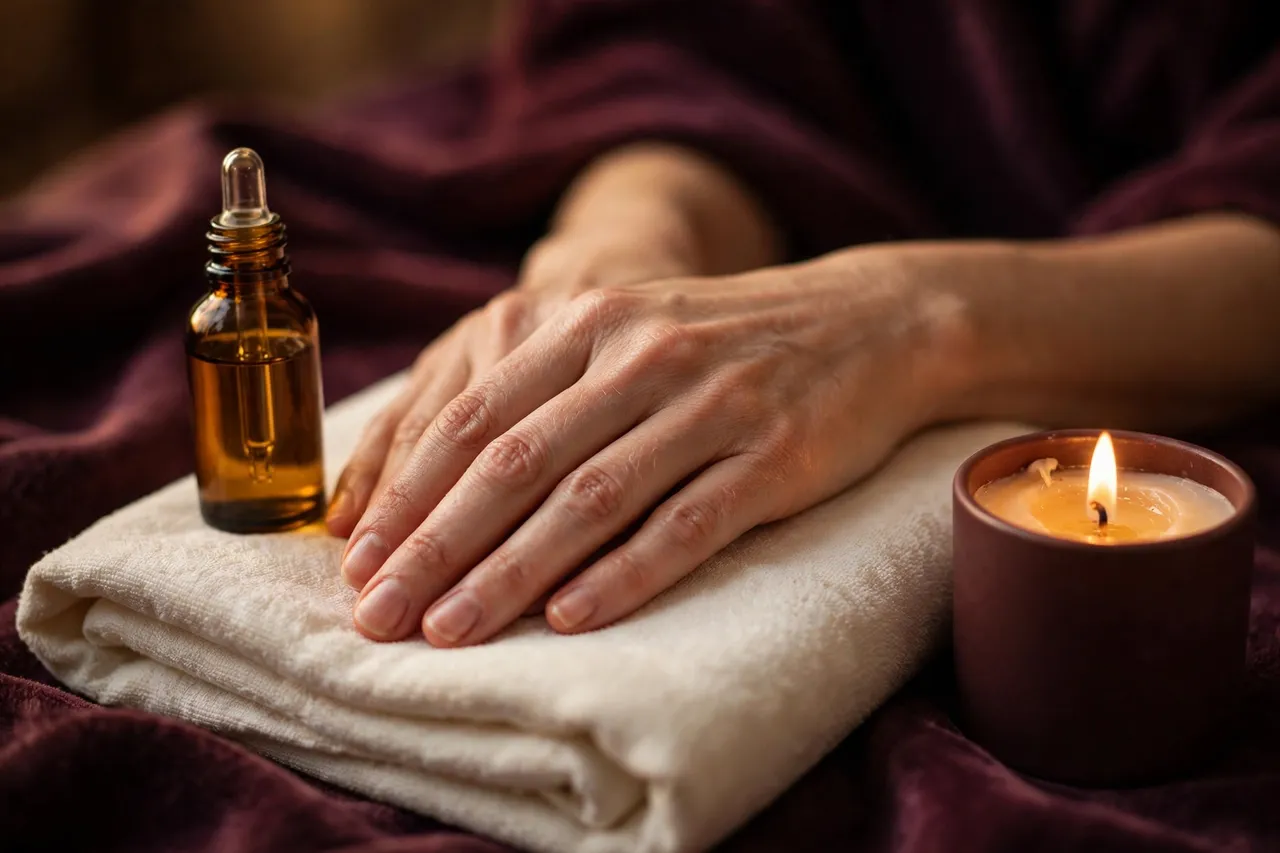
The room's light was kept very low. First came a warm towel against the back of my neck, its steam carrying a clean scent of soap, and my whole body sighed before I did. Then a palm settled over my shoulders and back — warm, steady — pressing slowly down through the places years of lifting and bending have kept tight. The soreness rose layer by layer, and my breathing sank with it, little by little. When fingertips reached my waist, they paused and asked first: is it all right here? I nodded, face buried in the pillow, suddenly close to tears — to be asked first, to be waited for until I nodded, that is what being respected feels like, in weight. In the hour that followed, all I remember is warmth and breathing: heat spreading from my shoulders to my fingertips, a body tightened by three nights loosening inch by inch, the sound of the monitors finally receding. What came after that, I will not write down — I only remember my last thought before I fell completely asleep: so this is what it feels like to hand yourself over, and feel safe. When I woke, Ajian had poured hot water and told me to sit a while before leaving, and not to rush into driving.
My Turn to Be Looked After
That evening I drove home deliberately slowly, the sunset spread across the windscreen, and I actually had the heart to watch all of it. Later I photographed my roster and sent it to a colleague: next month I will still take three nights in a row — not because I cannot change the habit, but because I have finally learned that after three nights, I first give myself back to myself. People who look after everyone also need a roster, and a turn to be looked after. If you would like to roster yourself an hour like this, screening takes a few days and the private arrangements are confirmed in advance — hold your time early on the booking page, instead of waiting for the day you can barely hold on. My next one is already circled: the first afternoon of my next break.
 Explore private spa →
 Explore pricing →
 Discover privileges →