
Three A.M.: My Last Goodnight of the Night
Some background: Yin Qichi, forty-six, a late-night radio host in Denver. My programme is called Night Flight, midnight to three a.m., nine years running. My voice has kept a lot of people company through the night: long-haul drivers, nurses on shift, new mothers who cannot sleep. Listeners call in and say, Qichi, slow down a little — your voice makes me drowsy. I smile and say, all right: goodnight, see you tomorrow. The second the red light in the booth goes out, the whole floor is just me, the air-conditioning humming, the water in my cup long cold.
My own nights look nothing like that. I drive home after four, wash, lie down — and my mind switches on like a machine just booted. An hour or two of sleep and I wake hot, a thin sweat on my back; I turn over, throw the blanket aside, and watch the ceiling until daylight. Colleagues say: it is your age, bear with it and it passes. I dislike that sentence. For nine years I have talked an entire city to sleep. Why, when it is my turn, should all I get be bear with it?
This Time, the Pace Is Mine
A listener who runs a bookshop mentioned a place once; I looked it up myself, read everything, filled in the screening form. One question I read twice: what pace would you like this hour to have — you may stop at any time, change at any time, or say nothing at all for the whole hour. I have hosted for nine years and the pace has always been in someone else's hands: ads timed to the second, callers cut on cue, the hourly time signal off by not a single beat. At that field I typed carefully: slower, please. I stop when I want to stop, I sleep when I want to sleep, and I do not have to keep anyone company in conversation.
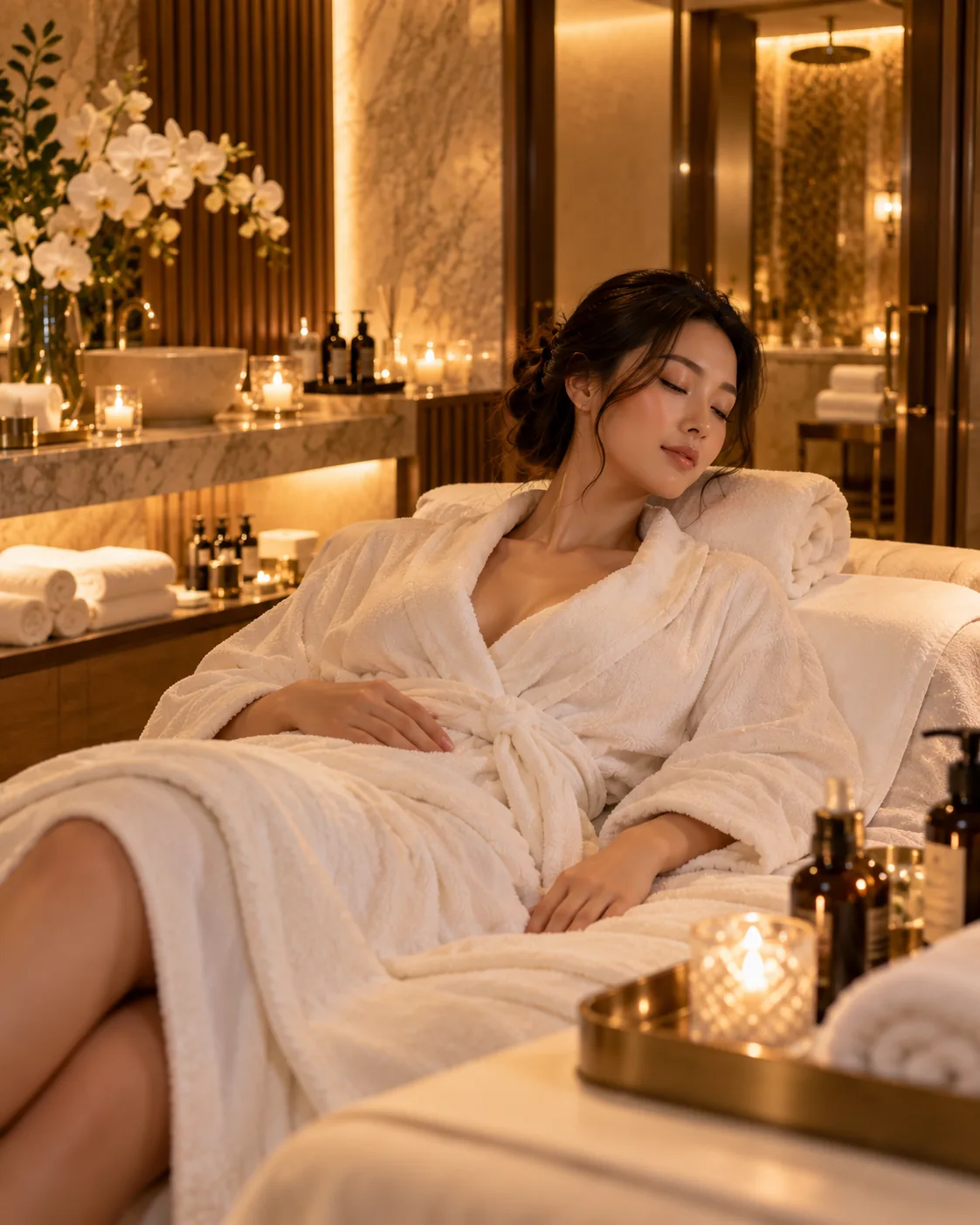
That night I went straight from the station, arriving at three-forty — the room dimmer than my own studio lights. Ayu, who received me, kept the explanation short; the last line was: there is no clock and no script here tonight. If you are sleepy, sleep. Raise a hand and I stop. I said I am a light sleeper; I probably would not sleep. Ayu said, not sleeping is fine too — just lie there. At that one line my shoulders dropped halfway on their own: for the first time, nobody required me to fill an hour to the brim.

An Hour With No Need to Speak
First a warm towel settled over my eyes, its heat resting on my eyelids, and everything around my ears went quiet at once. Then a palm came down over my shoulders and back — warm, weighty — pressing slowly through the stretch that nine years in a host's chair has kept tight. My professional disease is filling silence: the moment my hands idle, my mouth wants to move. I was about to make some small remark about the pressure when Ayu said, softly: no need to speak. I swallowed the sentence back — half wanting to laugh, half close to tears. So I, too, could spend a whole hour without cushioning anyone's words, smoothing anything over, or calling the time.
Afterwards I remember only heat: when the towel was changed for the second one, warmth ran down the back of my neck; a palm lingered longer at my lower back and asked: slower here — is that all right? I hummed an answer, too lazy even to nod. As my breathing slowed, there was only a faint sound of water and my own heartbeat beside my ears. What came after, I will not write down. I remember only my last thought before I fell properly asleep, and it was entirely unreasonable: so this is what it is to be held steady by someone — you do not even have to hurry your dreams.
Before Daylight, I Slept for Twenty Minutes
What woke me was a line of dawn light leaking through the curtain gap. Not long — twenty minutes — but the soundest sleep I had had in months: no waking hot, no staring at the ceiling. Ayu poured hot water, told me to sit a while, and asked if anyone was picking me up; if not, I should not drive myself. Outside, I called a car. In the back seat, the radio was replaying my own programme from that night. I listened to my own voice saying goodnight, turned the volume down to almost nothing, felt my eyelids sinking, and nearly fell asleep again right there in the car.
The next one is already decided: right after sign-off, without racing the daylight. If you want to take the pace back into your own hands, the screening takes a few days and the private arrangements are confirmed in advance — hold your time early on the booking page; the speed, the stops, the going are all yours, and no one will tell you to just bear with it. I am forty-six, and I have said goodnight to a whole city for nine years. From this month on, I keep one small hour after midnight, every month, to talk myself to sleep first.
 Explore private spa →
 Explore pricing →
 Discover privileges →